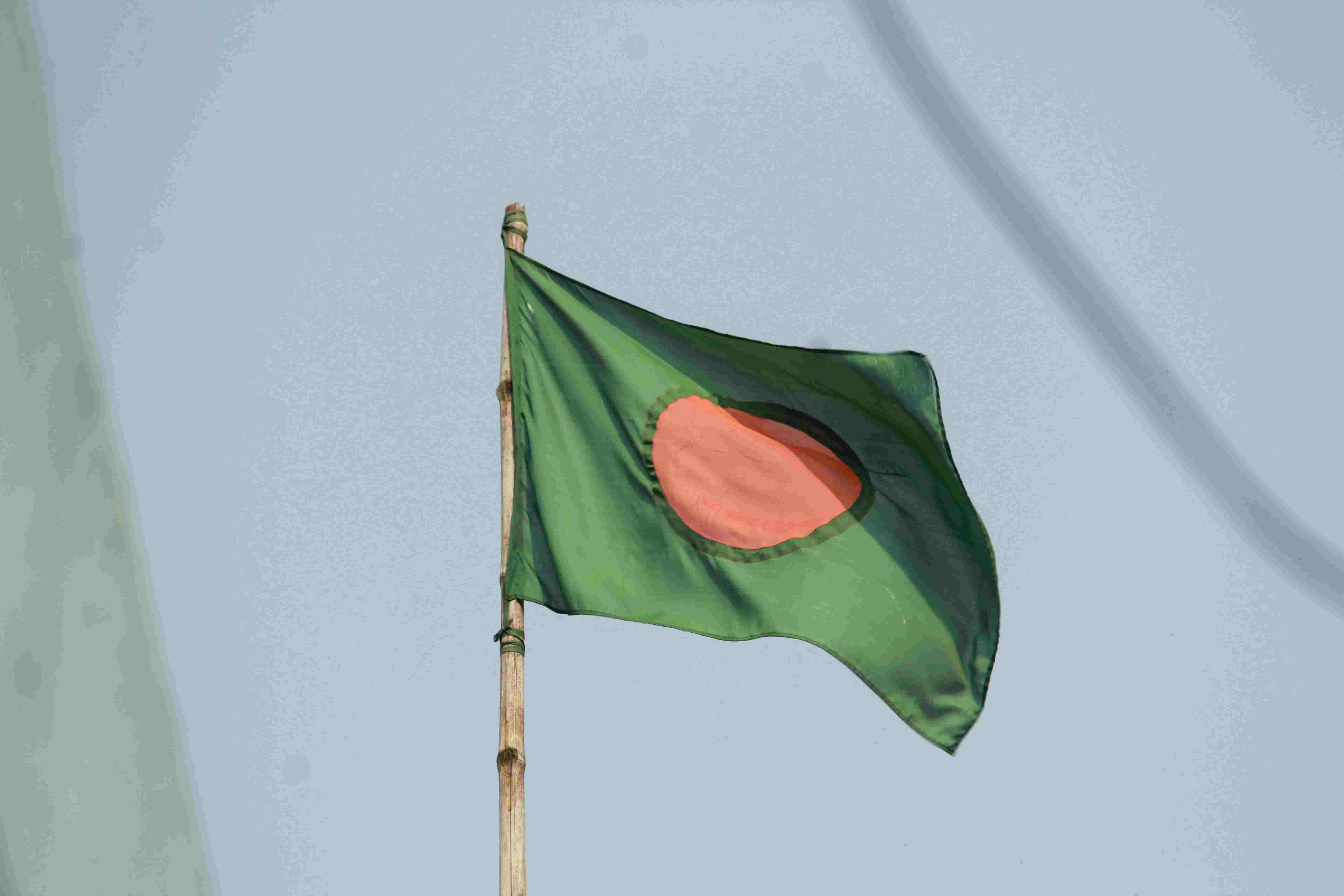
In the landscape of South Asian expansion, while India represents a mix of complexity and opportunity, Bangladesh has emerged as a quiet "digital miracle." Boasting a population of over 170 million and a mobile payment penetration rate exceeding 80%, more than half of its population still lacks stable mobile internet access.
Consequently, SMS and voice communications remain critical infrastructure for connecting with Bangladeshi users, securing transactions, and driving business growth. Today, ITNIO TECH will provide an in-depth breakdown of Bangladesh's macro environment, telecom operator landscape, and user engagement strategies to help enterprises establish a solid foothold in this high-potential market.
 Image Source: unsplash.comI. The Mobile Finance Miracle and the Digital Leap of 170 Million People 1. A Highly Youthful Consumer Market of Over 170 Million People
 According to UN and DataReportal data, Bangladesh's total population reached 177 million in 2026, making it the world's eighth most populous nation. The median age is just 26, with 60% of the population falling within the working-age bracket of 18 to 65, and those under 35 accounting for a staggering 63%. This high-density, remarkably young demographic profile provides an expansive user base for sectors like cross-border e-commerce, online gaming, and pan-entertainment social platforms.
2. Sustained GDP Growth and Rapid Expansion of the Digital Economy In recent years, Bangladesh has steadily advanced its "Digital Bangladesh" strategy, aggressively developing e-commerce, mobile payments, and digital infrastructure. Ready-made garment (RMG) exports, overseas worker remittances, and the booming digital economy have collectively fueled economic growth. According to International Monetary Fund (IMF) data, Bangladesh's GDP is projected to rise from $321.379 billion in 2018 to $510.705 billion in 2026, maintaining an average annual growth rate of around 5%.
3. The Rise of Digital Finance and Rapid Adoption of Mobile Payments Since 2011, the Bangladesh Bank (the central bank) has vigorously promoted Mobile Financial Services (MFS). Led by the dominant bKash wallet (boasting over 80 million registered users) and rising contenders like Nagad and Rocket, mobile payments in Bangladesh have achieved a leapfrog evolution. Bypassing traditional credit/debit cards entirely, MFS has reached an adult penetration rate of over 80%. From daily peer-to-peer transfers and utility bill payments to online shopping, Bangladeshis have firmly embraced a "mobile-first wallet" lifestyle.
Overall, Bangladesh is forging a powerful growth model driven by a demographic dividend, manufacturing upgrades, and an accelerating digital economy. Within this ecosystem, mobile networks, SMS, and voice capabilities have become vital infrastructure for businesses trying to establish user connections.
II. The Highly Concentrated Telecom Operator Landscape in Bangladesh According to data from the Association of Mobile Telecom Operators of Bangladesh (AMTOB) and the Bangladesh Telecommunication Regulatory Commission (BTRC), the total number of mobile phone subscriptions reached 187.07 million in 2026, achieving 100% network coverage across all 64 administrative districts. Currently, the Bangladeshi telecom market is divided among three major international private giants and one state-owned operator:
·Grameenphone (GP): Controlled by Norwegian telecom giant Telenor, GP is the undisputed market leader in Bangladesh, boasting 84.96 million active subscribers and a 43% market share. It commands the highest network density in the country, maintaining a decisive advantage in tier-2/tier-3 cities and rural areas.
·Robi Axiata: Jointly owned by Axiata Group and Airtel, Robi firmly secures the second-largest market position with 57.80 million subscribers and a 31% market share. Robi boasts exceptionally high penetration among young internet users, urban white-collar workers, and digital-first marketing channels.
·Banglalink: A subsidiary of the global telecom group VEON, Banglalink ranks third with 37.49 million subscribers and a 23% market share. Renowned for its highly cost-effective tariff strategies, it maintains strong user stickiness among specific youth demographics and suburban populations.
·Teletalk: The state-owned local operator accounts for just 6.82 million subscribers and a minor 3% market share, primarily serving government agencies, specific public utility sectors, and remote rural areas.
In summary, the Bangladeshi telecommunications market is highly consolidated, with dominant resources concentrated among top-tier operators. For expanding enterprises, partnering with a cloud communications platform capable of direct carrier connectivity is an absolute prerequisite to ensuring optimal SMS and voice quality. Currently, ITNIO TECH has established direct interconnections with all four major local operators, delivering stable, high-efficiency communication services across Bangladesh.
III. 180 Million Connections: Why SMS and Voice are Growth Bedrocks Despite the massive volume of mobile subscriptions, DataReportal highlights that internet users stand at 82.80 million (around 47% penetration), while active social media users sit at just 64.00 million (approx. 36% of the total population). This indicates that over half of the Bangladeshi population does not rely on social media or mobile data networks for their daily routines.
Furthermore, outside of core metropolises like Dhaka and Chittagong, peripheral industrial zones and rural areas frequently suffer from mobile data drops and high latency. Traditional SMS and cellular voice communications, therefore, serve as the indispensable infrastructure to cross regional divides and guarantee reliable delivery.
Simultaneously, driven by anti-money laundering (AML) and financial security requirements, the Bangladesh Bank strictly mandates Two-Factor Authentication (2FA) for all MFS wallet activations, cash-outs, and funds transfers across platforms like bKash and Nagad. Because SMS-based One-Time Passwords (OTPs) do not require data networks, are tamper-proof, and carry the highest data-retention and regulatory compliance validity, they have become the gold standard for secure financial and e-commerce transactions.
For time-critical scenarios like logistics delivery and loan repayment reminders, the instant visibility of SMS and the immediate response of automated voice calls prove far more effective than App push notifications, which are frequently suppressed by mobile operating systems.
IV. Four Essential Communication Strategies for Entering Bangladesh To drive user retention and sustainable growth while remaining fully compliant with Bangladesh's distinct legal framework and market conditions, expanding enterprises must adopt highly targeted communication strategies:
1. Prioritize a High-Availability OTP ArchitectureWith the exponential growth of fintech, e-commerce, and digital services in Bangladesh, the verification code is the very first step of user conversion. Carrier-backed SMS and voice authentication operate independently of mobile data availability, making them foundational components of a resilient verification system. Furthermore, due to legacy market factors, enterprises should augment standard SMS/voice verification with device fingerprinting, behavioral analysis, and fraud risk scoring to establish a comprehensive identity verification matrix, filtering out invalid traffic and ensuring lead authenticity.
2. Drive Trust via Native Bangla Messaging Bangladesh features extreme linguistic homogeneity; over 98% of the population speaks Bangla (Bengali) as their sole native language, with English strictly limited to business elites in tier-1 cities. Consequently, when mapping out notification templates, marketing copies, or voice broadcast scripts, enterprises must prioritize localized Bangla. Doing so drastically improves message open rates, fosters user trust, and optimizes conversion outcomes.
3. Deploy AI Agents to Bridge Literacy GapsLiteracy variations persist across remote rural areas and downstream industrial zones in Bangladesh, meaning plain English or rigidly translated text messages often yield poor performance. For critical touchpoints such as financial follow-ups, delivery coordination, and promotional campaigns, voice communication should be widely adopted.
ITNIO TECH's AI Agent Call has been deeply optimized for the Bangla language and its regional dialects. It interacts natively with users via script-free, hyper-realistic multi-turn dialogues, effortlessly shattering textual barriers while driving drastic efficiency gains in financial collections and cash-on-delivery (COD) logistics.
4. Guarantee Compliance through Audit-Ready Communication LogsThe BTRC enforces stringent regulations against unsolicited commercial communications; non-compliant bulk marketing without prior approval can lead to the permanent blacklisting of an enterprise's Sender ID by local carriers.
Additionally, Bangladesh maintains rigorous foreign exchange controls. When cross-border funds are repatriated or cleared (e.g., e-commerce revenues or financial service fees), foreign enterprises must present transparent operational evidence. Through the unified platform and standardized APIs provided by ITNIO TECH, businesses can seamlessly retrieve fully auditable logs for every verification, notification, and voice interaction to comfortably satisfy central bank compliance audits.
Fueled by a population dividend of over 170 million and an unprecedented mobile financial miracle, Bangladesh presents immense explosive potential. Yet, in this intricate market, an enterprise's growth ceiling is ultimately defined by its compliant communication capabilities. SMS and voice remain the vital trust infrastructure bridging cross-border enterprises and Bangladesh's 180 million mobile users.
ITNIO TECH will continue to expand its premium telecom resources across South Asia. Backed by direct routing with the country's four major networks, an experienced local compliance team, and our AI-powered cloud communications suite, we stand ready to help enterprises cross digital divides and regulatory boundaries, building a truly robust, secure, and intelligent global connection framework in Bangladesh.